
Dr Ranjiv Sivanandan
Head & Neck and Thyroid Surgeon
MBBS (Singapore), FRCS (Edinburgh), MMEd (Surgery), FAMS
Head & Neck Surgery in Singapore
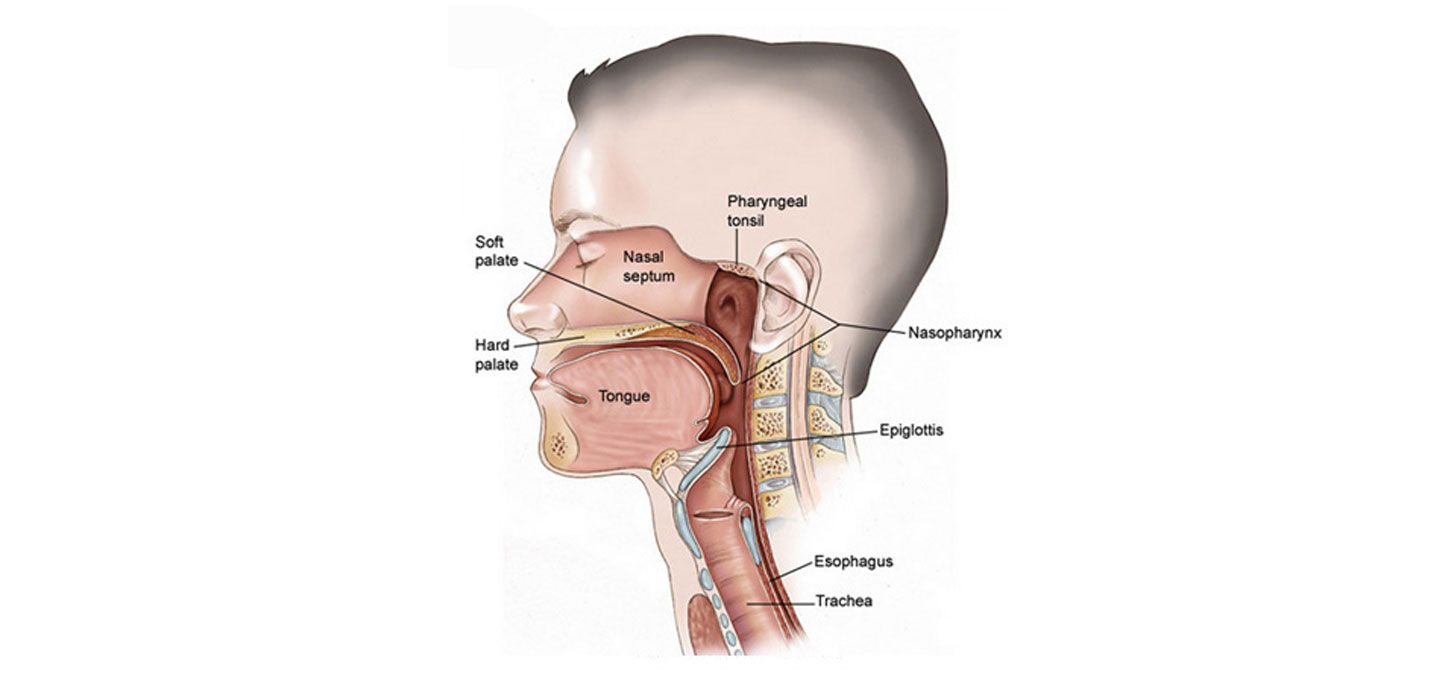
Head and neck cancers are the 6th most common cancer worldwide. They consist of a group of biologically similar cancers originating from the upper aero-digestive tract (UADT), which is an anatomic region comprising of the
- Nasal Cavity (nose, nasal septum and turbinates)
- Nasopharynx (area posterior to the nasal cavity)
- Paranasal Sinuses (hollow bony spaces centered around the nose)
- Oral Cavity (lip, tongue, jaw, gums, cheek and hard palate)
- Oropharynx (tonsils, soft palate and posterior third of the tongue)
- Hyoppharynx (throat and upper gullet)
- Larynx (voice box)
The majority of head and neck cancers are SQUAMOUS CELL CANCERS (SCC). SCC is strongly associated with lifestyle risk factors, including tobacco and betel nut use, alcohol consumption and certain strains of the human papillomavirus (HPV) that are sexually transmitted.
In the Asian subcontinent a slightly different cancer, NASOPHARYNGEAL CANCER (NPC), also referred to as "NOSE CANCER", is also very common. Although NPC arises from the UADT, it is distinct from squamous cancers of the UADT in its epidemiology, biology, clinical behavior, and treatment.
SCC and NPC often spread to the lymph nodes of the neck, and this is may indeed be the first presentation of the disease, a neck lump representing a swollen cancerous lymph node.
Head and neck cancers are curable if detected early, but treatment frequently involves a combination of surgery, radiation therapy and chemotherapy.
Symptoms
Common symptoms associated with head and neck cancers in are:
- A mass or lump in the neck
- Persistent voice change or hoarseness
- Difficult or painful swallowing
- Ear pain (which may represent pain referred from throat cancer)
- Hearing loss, particularly if one-sided
- Persistent nasal congestion or bloody nasal discharge
- A non-healing tongue ulcer, poor healing tooth socket or persistent white or red discoloration within the oral cavity
Staging
Accurate staging of a head and neck cancer is essential for determining the appropriate treatment strategy to adopt as well as for the assessment of long-term prognosis.
The American Joint Committee on Cancer / International Union against Cancer (AJCC/UICC) Staging System is the most universally recognized and accepted staging system. It utilizes the TNM Classification of malignant tumors, where
- T represents the size of the TUMOR,
- N determines the absence, presence & number of Lymph NODES involved by cancer
- M denotes evidence of spread elsewhere in the body, called METASTASIS, to organs like the lungs, bone or liver
The T, N, and M scores are then pooled together to provide an overall "stage" of the cancer. Cancer stages range from STAGE I through IV.
Stage I & II are referred to as early stage, and Stage III & IV as advanced stage cancer.
Treatment
Advancements in diagnostic imaging, surgical techniques and radiation & chemotherapy delivery have led to improvements in survival and quality of life for head and neck cancer patients.
Selection for appropriate treatment strategy for a specific cancer depends on a number of key factors including:
- Tumor type, size and site
- Clinical stage
- Relative morbidity of the various treatment options at the specific sites
- Patient performance and nutritional status
- Co-morbid medical conditions (eg. co-existing heart or kidney disease)
Early stage cancers (Stage I & II) are usually treated with SINGLE MODALITY TREATMENT. This may be in the form of:
- SURGERY or
- RADIATION THERAPY
Advanced cancers (Stage III & IV) usually require MULTIMODALITY TREATMENT. This may be in the form of:
- SURGERY followed by RADIATION THERAPY, with or without CHEMOTHERAPY or
- COMBINED CHEMO-RADIOTHERAPY, with SURGERY as salvage treatment if there is evidence of recurrent or residual disease
Prognosis
Early-stage head and neck cancers (Stage I and ll) achieve high cure rates of between 85 - 95%.
More than two thirds of all head and neck cancer patients, unfortunately, present with locally advanced disease. The cure rates for locally advanced disease (Stage Ill and IV) decreases to between 40 - 65%.
Recurrent disease, spread to other organs (metastasis) and new primary cancers are the main cause of morbidity and mortality for head and neck cancers.
\Meet Our Head & Neck Surgeon in Singapore
Dr Ranjiv Sivanandan is an accredited general surgeon with advanced training in Head and Neck Surgical Oncology from Stanford University. His clinical experience includes the management of major head and neck conditions and procedures involving the upper aerodigestive tract, lymph nodes and related structures. With over two decades of experience, he has managed a wide range of conditions, including thyroid nodules, thyroid cancer and other head and neck disorders.
Dr Ranjiv is recognised for his expertise in advanced surgical techniques, particularly in robotic thyroid and head and neck surgery. He performed the first robotic thyroidectomy in Singapore and the first robotic neck dissection in Southeast Asia, reflecting his commitment to minimally invasive approaches and surgical innovation. His clinical work is complemented by involvement in research and education, including roles at the National Cancer Centre and the National University of Singapore.
In his clinical practice, Dr Ranjiv adopts a patient-centred approach, ensuring that each individual is fully informed of evidence-based treatment options and actively involved in decision-making. His focus is on delivering personalised care and achieving optimal outcomes for every patient.
- Trusted Singapore Thyroid and Head & Neck Surgeon
- More Than 20 Years’ Experience
- Surgical Expertise in Thyroid Nodules & Cancer
- Personalised Care & Best Practices
- Evidence Based Treatment Options
(Stanford University, USA)
3 Mount Elizabeth #17-07
Mount Elizabeth Medical Centre
Singapore 228510
 :
:  : +65 6732 0112